
Concrete finishes
Broom, exposed aggregate, or stamped concrete: how to compare a finish
A practical way to compare concrete texture, pattern, borders, color direction, and maintenance before choosing a finish.
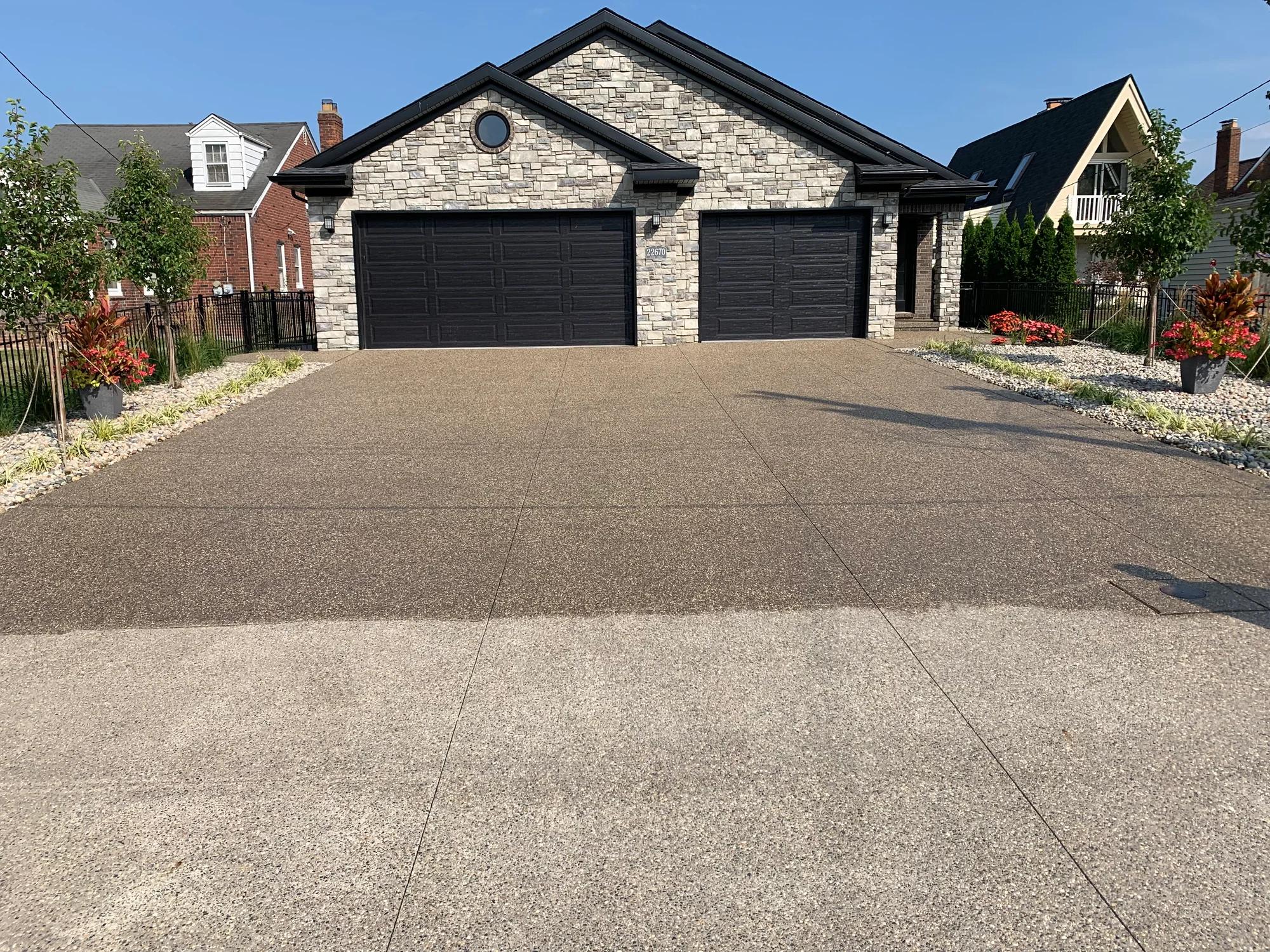
Start with how the surface will be used
A driveway, front walk, patio, and commercial entry do not ask the same things of a finish. Think about vehicle loads, foot traffic, wet conditions, cleaning, nearby landscaping, and the look of the home or building. The right finish is a project decision, not just a favorite photograph.
Broom finish creates fine parallel ridges in fresh concrete. Exposed aggregate reveals stone from the mix at the surface. Stamped concrete presses a pattern into the surface. Each can have a different visual effect and a different preparation and finishing sequence.
Compare the whole composition, not only the field
A border can frame a driveway or patio with a different pattern, color direction, or texture. Joint layout and the proportions of the field affect the result as much as the finish name. A smaller patio may call for a different pattern scale than a long driveway.
When comparing options, write down the field finish, border finish, color direction, joint layout, and any curved or stepped areas. A physical sample should guide the final choice. Screen images and generated concepts are illustrative, not calibrated material swatches.
Ask about preparation and maintenance
Ask how the existing slab or site will be prepared, what drainage and joint details belong in the scope, and what sealing or cleaning the finish will need. A decorative surface does not remove the need for a suitable base and a realistic maintenance plan.
A visualizer is useful for comparing composition before a site review. It cannot guarantee the installed color, texture, or exact pattern scale. Final product choices belong with the physical sample, the written scope, and the actual site.
Sources and next steps
This guide is general information, not legal, structural, or project-specific advice. Current source documents and actual site conditions govern the work.